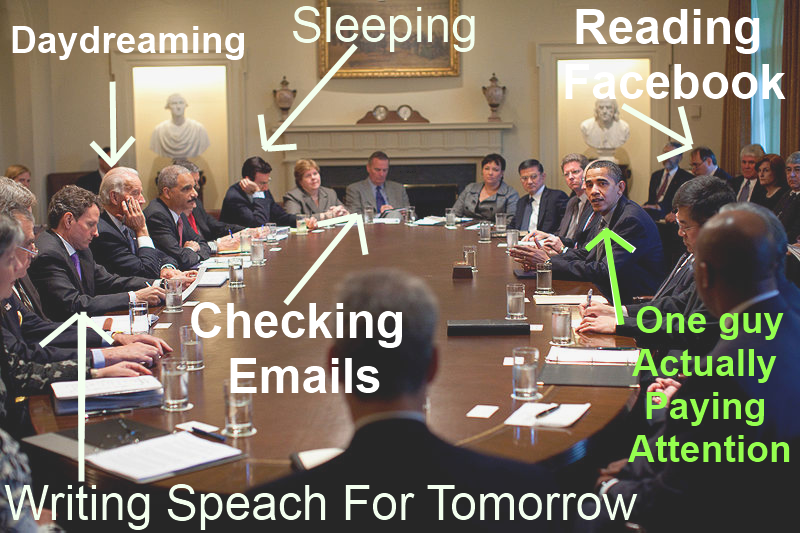
Have you ever found yourself sitting through a conference call with 20+ people when you were actually doing working instead of paying attention to the meeting?
POP QUIZ – You get called on… but you were not paying attention. What do you do: (A) Tell the moderator that you missed the question, ask them to repeat it.
(B) Give a random status update on one of your 3 projects (hoping no one else is actually paying attention).
(C) Sit quietly and hope that they assume you have dropped off the call or are stuck on mute.
(D) Ask the group “Why do we have 27 of our best employees sitting through a two hour meeting when the only update that matters to each person is their 3 minutes of status?
Are you guilty of answering with (A), (B), or(C)?
You would have liked to answer with option (D), but I am guessing that like most other people you were too scared to call out the status quo without a great reason why it should be questioned.
Out of all of the people we have talked with at the 500+ companies that have signed up for LessMeeting, I think every one of them has said that they sit in too many meetings with too many people.
The worst part is… they all acknowledged that those meetings are the suck*.
Seriously, when was the last time you heard anyone say: “This meeting was OK, but if we added 15 or so more people it would have been a lot more productive”… NEVER
Key Questions For You To Answer
How do you build the ammunition and credibility to be able to step up with Answer (D)?
Alternatively, how do you change the culture of the people you work with to avoid these massive 25 person wastes of time?
If you would like the answers to these questions, keep scrolling down and read the rest of this post. Otherwise, please return to ignoring the conference call you should be listening to… Take Action
If you want to tackle your issue of too-many uber-large meetings, I recommend you work on answering these 4 questions:
Question 1: Are you having the right types of meetings?
Very few meetings should have more than a dozen people in them. The few exceptions that are acceptable are:
- All hands meetings – Quarterly or annual all hands meetings are a good platform for organization leaders to talk about the organizations direction/strategy and to give an open forum for discussion (although I recommend gathering questions prior to the Q&A session).
- Training sessions – Training Classes can acceptably host 15-20 people, but a few decades of research indicates that class sizes of less than 15 are the most effective.
For the other types of meetings:
- Status / Information Meetings – These are the most excessively attended type of meeting. It is never valuable to have 20+ people in a room (or on a call) giving 3-5 minutes of status to a manager, director, or executive. HAVE SMALLER MEETINGS and get people to EMAIL BETTER STATUS REPORTS.
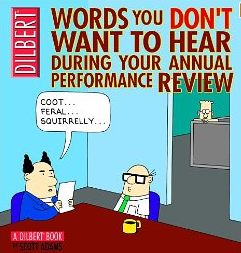
- Review / Evaluation Meetings – These should always be done one on one… more than two people is TOO MANY. If you are responsible for managing someone, you should never discuss their performance feedback in front of the whole team.
- Business Development Meetings – If you are trying to sell something to someone, don’t show up at your client with a team of more than 3 people. Showing up with 10 of your co-workers is confusing to your client.
- Problem Solving / Decision Making – Try to keep decision making meetings to less than 8 people. I am a firm believer that humans don’t make better decisions when in a larger group (also known as Herd Behavior or Groupthink). For examples of how people make bad decisions in large groups, take a look at these sites: http://www.house.gov/ or http://www.senate.gov/
Question 2: Are people scared of being left out of meetings where decisions that impact them might be made?
I imagine that you at one point in time have been burned by someone making a bad decision on your behalf. Following that incident, I bet you never missed a meeting with those people again.
How do you fix this?
Don’t make decisions without a key stakeholder present.
Parking-lot that item as a follow-up for the meeting. If you need to make the decision at that exact point in time, call their cell and get their input on the spot. If someone makes decisions without another key stakeholder present it will create a phobia of missing meetings.
Question 3: Do you have a “Meeting Club” culture?
Are you part of the club? If you are not in the meeting you are obviously not important…this sounds a lot like high school, but I have seen a lot of companies that have the club mentality. In these clubs you need face time with people to get recognition. Meetings have become a social avenue of success in many companies.
How to fix these “Clubs”:
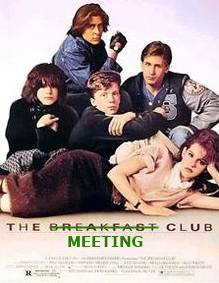
If you are CEO – Have a chat with a few of your club leads, require that they provide everyone with agendas and formal meeting minutes from all of the meetings they organize.
If you are in the Club – Stop having club meetings during the work day. Move the club to extra-curricular activities such as a morning running club, lunch time basketball club, or after work happy-hour club.
Don’t invite people to meetings if they are not a stakeholder or key-contributor to the meeting. Send them a follow-up note with the meeting minutes and any relevant points they should be thinking about.
Question 4: Are people in your organization empowered to Decline meetings?
This is a strange question, but are people in your organization empowered to JUST SAY NO?
No one should feel obligated to go to a meeting unless it directly impacts them.
When you organize meeting invites you can do a few things such as these to help enable people to say no:
Make certain meeting attendees optional and send them a follow-up up email such as this:
“Tom, Dick, and Harry:
I know you guys are really busy with project-XYZ. I included you on this meeting invite as optional so that you would receive the meeting notes that come out of the meeting.
I don’t expect you to attend unless you have something critical to discuss in the meeting. I will send a follow-up email after the meeting.
Thanks,
Sally“
You should also make sure that people know what their role in the meeting it. If they are a stakeholder, you need to make sure they are aware of this so that they do show up at the meeting. If they are going to be a non-active participate and just need to be kept in the loop, please let them know so they can decide whether they want to decline the meeting
Summary answer to question 4: Empower people To Just Say NO.
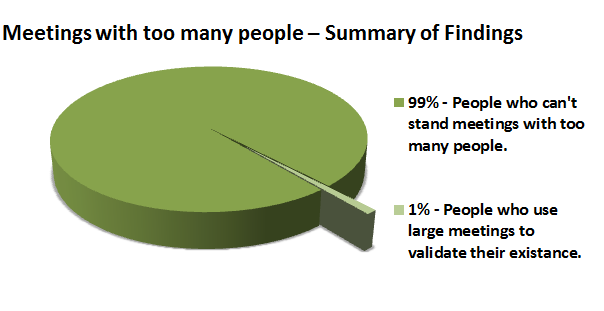
You now have 4 questions to help you with your meeting size problems… Go forth and trim a few people off of your meetings.
_____________________________________________________
*Note: “Meetings Are the Suck” was a phrase coined by Murray Gordon, one of our mentors from Microsoft during their 2008 BizSpark competition. We can’t take credit for this awesome quote, but we like to say it a lot.
**The Second image Is from The Dilbert book “Words You Don’t Want to Hear During Your Annual Performance Review” Other images (without modification) were originally from Wikipedia.org. If your grandma still buys encyclopedias, you should print out the Wikipedia and send it to her for Christmas.
**The Second image Is from The Dilbert book “Words You Don’t Want to Hear During Your Annual Performance Review” Other images (without modification) were originally from Wikipedia.org. If your grandma still buys encyclopedias, you should print out the Wikipedia and send it to her for Christmas.